Porsche
917-043
THE DEFINITIVE HISTORY OF THE HIPPIE CAR

Gérard Larrousse
“The Porsche 917 I drove in 1970 and 1971 was a very successfully developed car. It wasn’t hard to manage. It was extraordinary and extremely fast in the straights. You could get up to 390 km/h. Its grip was nearly perfect. The car allowed me to finish second overall in 1970 despite very challenging weather”
— On driving 917-043, the Hippie Car to second overall in the 1970 24 Hours of Le Mans
The Porsche 917 – le mans legend
When it comes to legendary Le Mans cars, few have captured the world’s imagination like the Porsche 917.
Born for glory, it won the 24 Hours of Le Mans twice, once in 1970 and again in 1971, forever securing its place among the greatest racing cars in history.
Developed in an intensive period of design that began in the spring of 1968, the 917 was created in just 10 months, with one underlying goal: to win the 24 Hours of Le Mans outright.
With a chassis developed by Helmuth Bott and Porsche’s first 12-cylinder engine by Hans Mezger, the 917 was a rolling showcase for the latest racing technology, featuring an aluminium tube space frame chassis, components made from titanium, magnesium and exotic alloys and aerodynamic bodywork crafted through wind tunnel testing.
In 1969, the 917 failed to take the chequered flag owing to technical difficulties but the following year, the formula was perfected. In the 1970 running of the race, it was the 917K (‘Kurz’ meaning short chassis), which came in first, driven by Hans Herrmann and Richard Attwood, while the Martini “psychedelic” liveried 917 LH (‘Lang Heck’ meaning ‘long tail’), which came in second, driven by Gérard Larrousse and Willi Kauhsen.
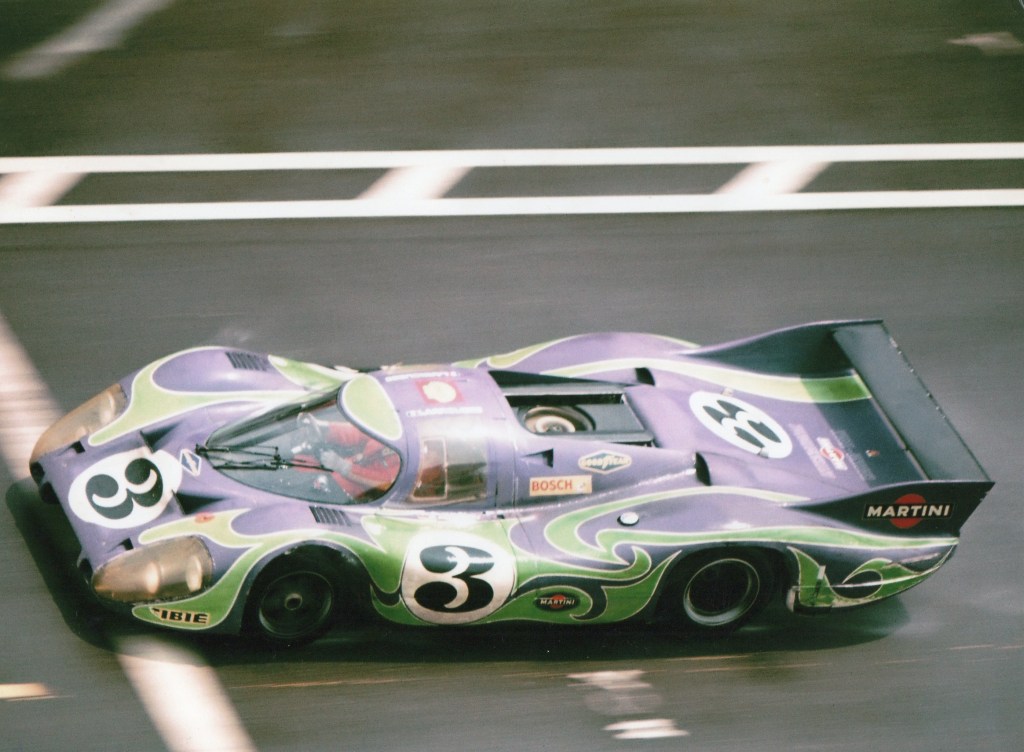
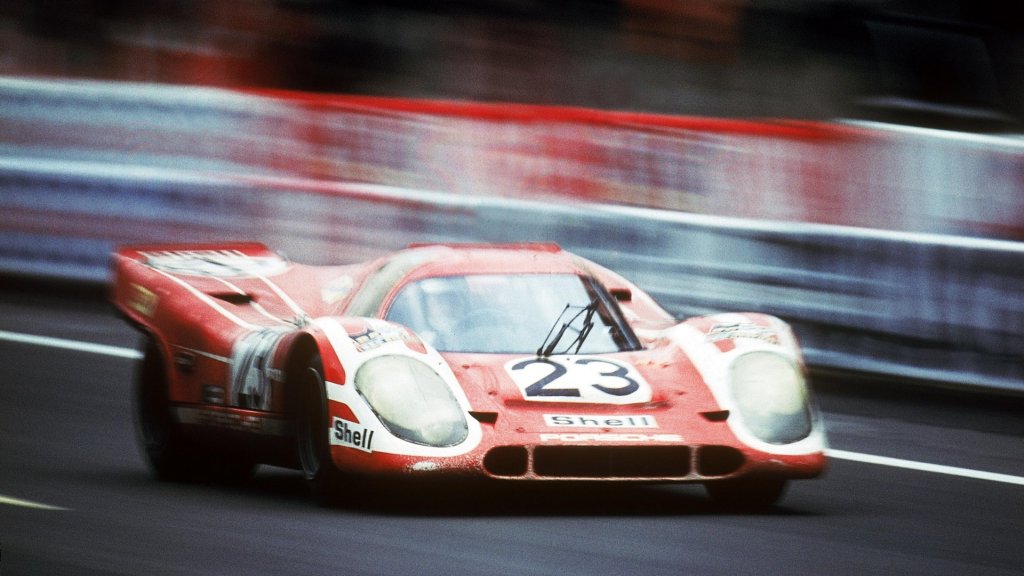
917-043 LH (above) and 917-023 K (below) at the 24 Hours of Le Mans, June 13-14, 1970
Porsche 917-043 – “The Hippie Car”
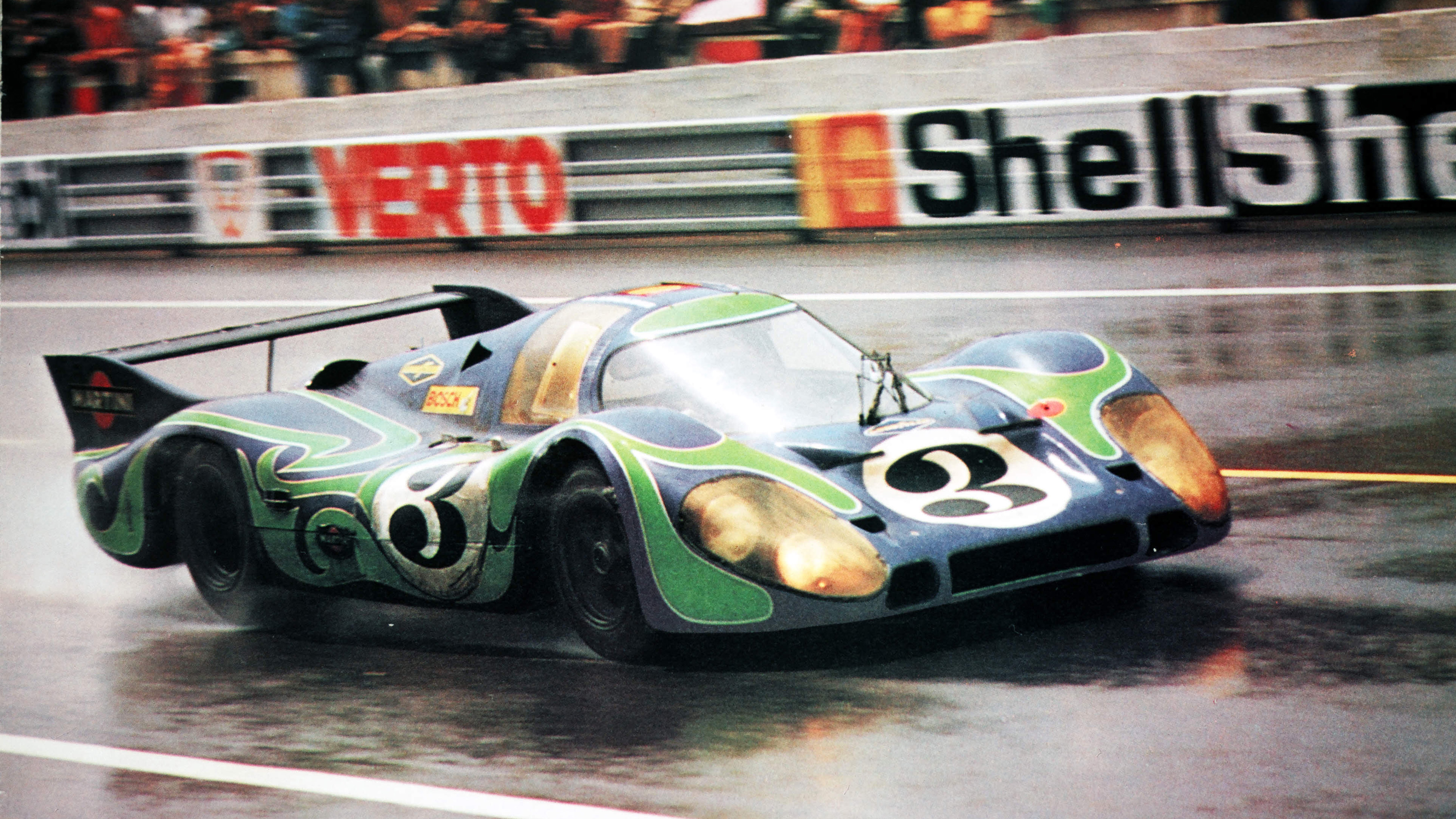
917-043 running in the final hours of the 1970 24 Hours of Le Mans
Of all the 917s, the most renowned and recognisable is ‘The Hippie Car.’
Chassis 917-043 acquired its nickname after the radical, psychedelic liveried car stunned spectators when it finished second overall at the rain-soaked 1970 24 Hours of Le Mans.
Fielded by the Martini Racing Team, the long-tail 917 LH number three car was driven by Gérard Larrousse and Willi Kauhsen, finishing behind the number 23 short-tail 917 K driven by Hans Herrmann and Richard Attwood and fielded by Porsche KG Salzburg.
But the Hippie Car’s racing career was far from over following its Le Mans podium, while its life as one of the most storied and celebrated racing cars was only just beginning.
